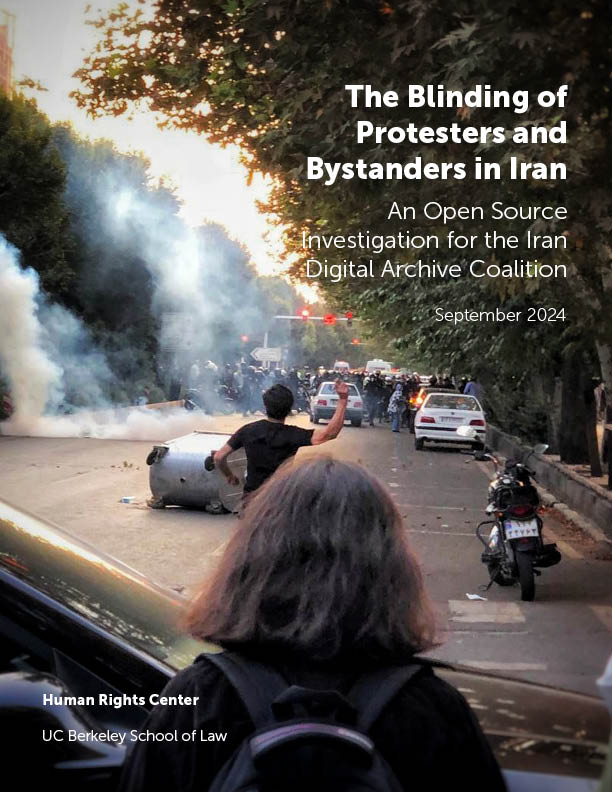
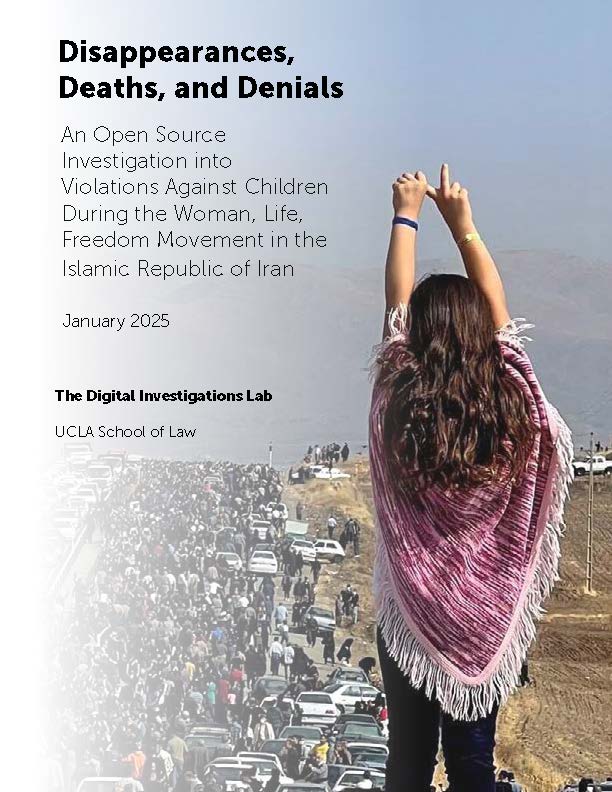
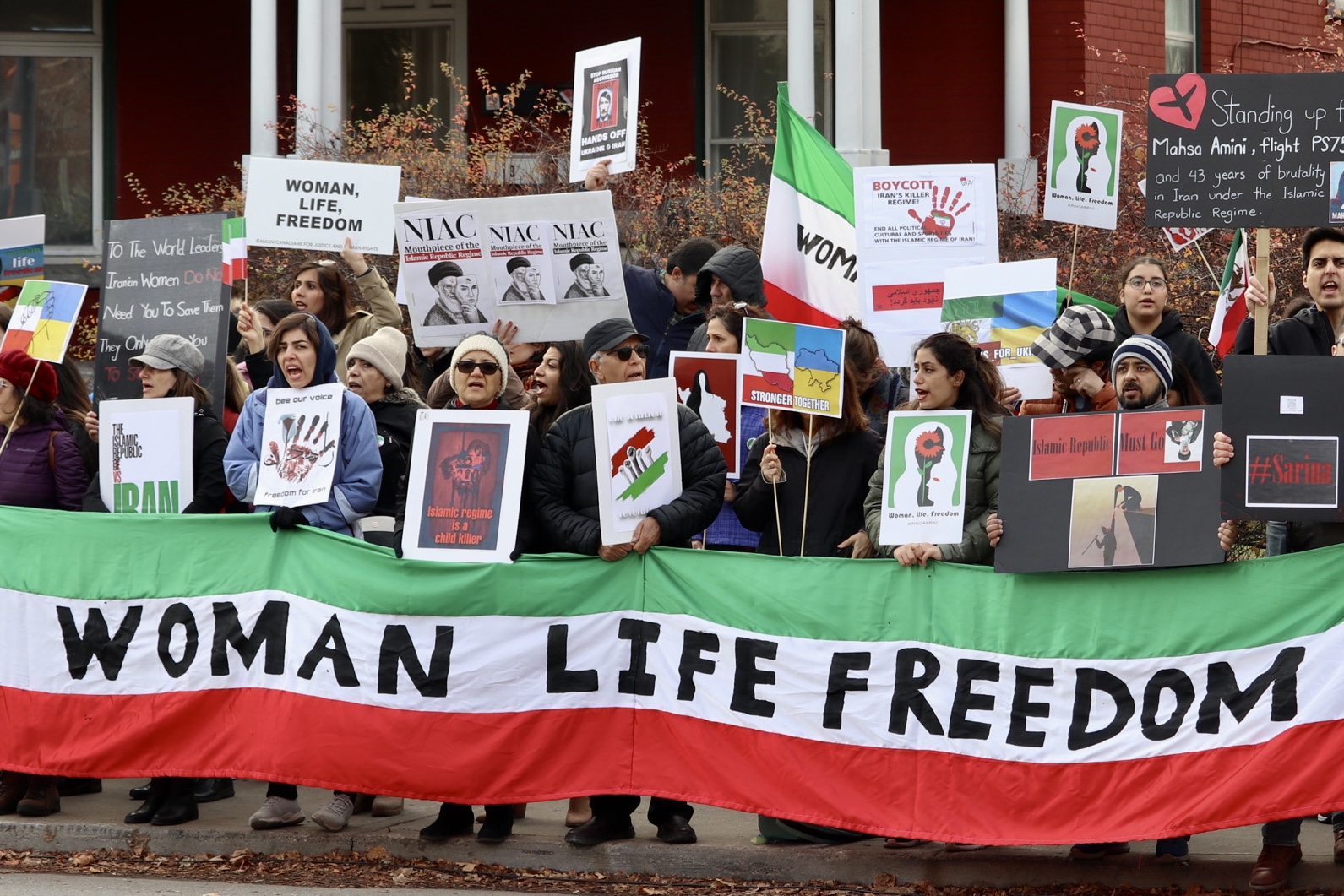
The Blinding of Protesters and Bystanders in Iran
Publication Date
September 17, 2024
Publication Type
Report
Topic(s)
Conflict, Human Rights Investigations Lab, International Criminal Law, Investigations Program
Summary
This report, “The Blinding of Protestors and Bystanders in Iran: An Open Source Investigation for the Iranian Archive Coalition,” is one in a series analyzing human rights violations and international crimes committed by the Islamic Republic of Iran (Iran or IRI or Islamic Republic) in its brutal crackdown on Woman, Life, Freedom protesters. Each investigation is largely based on open source information that has been preserved as part of the Iranian Archive — a repository of digital content that has been forensically preserved for use in future accountability efforts. Each report in this series focuses on a different set of violations, and together they make visible some of the harms suffered by Iranian protesters in their demands for freedom and respect for their human rights.
In early fall 2023, the Investigations Lab at UC Berkeley’s Human Rights Center was invited to join a coalition of organizations that had recently begun investigating alleged crimes and human rights violations perpetrated by the Islamic Republic of Iran against protestors. Our team was tasked with using data from the Iranian Archive to identify, evaluate, and verify the alleged blinding of people who participated in or were bystanders to protests that had been triggered by the killing of a young woman from Iran’s persecuted ethnic Kurdish minority, Mahsa Jina Amini, for her alleged “improper” wearing of hijab in September 2022. This report summarizes our findings from that investigation.
Key Takeaways
- The report from UC Berkeley’s Human Rights Center details the blinding of Iranian protesters and bystanders as part of a crackdown by security forces during the Woman, Life, Freedom movement. It documents deliberate blinding through shootings, notably with pellet guns, suggesting tactical use of such violence to quell protests.
- The Investigations Lab at UC Berkeley analyzed open source data, revealing that out of 124 identified blinding incidents, over 50% involved pellet guns, with Tehran and Kurdish regions seeing a concentration of cases. Victims were predominantly under 30, illustrating targeted violence against youth participants in protests.
- Case studies and victim accounts suggest intentionality in using force to blind protestors, e.g., incidents of individuals singled out and shot at close range in the eyes, with officers reportedly smiling before shooting. The report underscores systemic efforts to suppress dissent through severe physical harm.
- The accountability efforts are backed by a coalition of international organizations preserving digital evidence in the Iranian Archive, aiming to support future legal actions. The coalition supports investigations leveraging digital open source methodologies for verifying and documenting human rights violations in Iran.
- The physical and socio-economic impacts of blinding were severe for many victims, who faced loss of vision, threats, intimidation, forced relocation, and loss of livelihoods. The report emphasizes the need for international legal frameworks to address and prosecute these human rights violations effectively.
- Bystanders and demonstrators encountered similar fates, indicating a widespread attack on civilians associated with the protest movement. The extensive use of live ammunition to deliberately target and blind individuals hints at an official state policy and warrants further international scrutiny and response.
Suggested Citation
Wong, M., Zou, M., Murray, B., Tuku, S., Andrews, S., Guercke, L., Moore, K., Haddock, C., & Koenig, A. (2024)
The Blinding of Protesters and Bystanders in Iran.
Human Rights Center, UC Berkeley. https://humanrights.berkeley.edu/publications/the-blinding-of-protesters-and-bystanders-in-iran/