
2026 Student Fellows


AJ Loper
Partner: Calaveras County Historical Society
UC Merced, Interdisciplinary Humanities
AJ will analyze archival documents, archaeological surveys, and more from the Calaveras County Historical Society. These resources will help identify links between man-made climate change in the 21st century and the industrial developments that arose out of the Gold Rush that degraded landscapes and indigenous populations.

Ei Thandar Myint
Partner: Anonymous
UC Berkeley, Department of Agricultural and Resource Economics
Ei is implementing and analyzing an individual-level randomized internet subsidy experiment at Starlink-enabled cafés in Myanmar’s liberated areas, where the military has imposed prolonged full internet shutdowns. The study will track internet access and use, identifying the causal effects of regained connectivity in a highly repressive, conflict-affected setting. This project will assess whether government subsidies increase total internet connectivity; how time online is allocated across platforms and uses; and whether increased access yields downstream changes in knowledge, beliefs, perceived risks, collective action, and welfare outcomes.

James Mawien Manyuol
Partner: Disabled Agency for Rehabilitation and Development
UC Berkeley, Graduate School of Journalism
In partnership with a national not-for-profit organization operating in Lakes State, South Sudan that supports persons with disabilities, women, and children affected by poverty, discrimination, violence, and injustices, James will map, gather, and analyze data of street children to determine the ratio born to women with disabilities within Lakes State. The objective of this project is to strengthen the organization’s role in documenting stories of these women, and lobby policy makers to promote their rights. James will produce short-form videos highlighting these families to boost the organization’s awareness campaigns in advancing rights of this disadvantaged group.

Kate Reeves
Partner: Federación Nativa del Río Madre de Dias y Afluentes
UC Berkeley, School of Law
Kate will support her partner’s implementation of the project, “Consolidation of Territories of Life and the Rights of Indigenous Peoples in the Madre de Dios River Basin.” Her work will advance efforts to protect Nations’ territorial rights, fight illegal deforestation and extractivist activities, and defend environmental defenders.

Katherine Wolf
Partner: Disability Rights California
UC Berkeley, Environmental Science, Policy, and Management
Katherine will analyze environmental exposures, including starting a drinking water quality testing pilot program, at facilities that involuntarily detain disabled people in California to build evidence of human rights violations in those facilities. This project specifically responds to complaints of dirty and non-potable drinking water that Disability Rights California (DRC) has received in the past year from disabled people in Immigration and Customs Enforcement (ICE) detention centers, as DRC has only been able to report water quality problems as anecdotes because they do not have scientists on staff. This project combines DRC’s legal authority to enter facilities that serve disabled people, including ICE detention centers, state hospitals, developmental centers, privately-run psychiatric facilities, and/or jails, with the expertise of environmental health scientists at UC Berkeley to establish evidence of specific water and other pollutant exposures that DRC can use in their litigation and advocacy efforts.

Krystal Anderson
Partner: Community-Based Rehabilitation Ghana
UC Berkeley and San Francisco State University, Special Education
In collaboration with CBR Ghana staff, Krystal will work with families of children with disabilities to collect narratives and community perspectives related to disability, inclusion, and access to raise awareness of disability experiences within local communities.

Medina Danish
Partner: Asylum Seekers and Refugees Solidarity Association
UC Berkeley, Global Studies
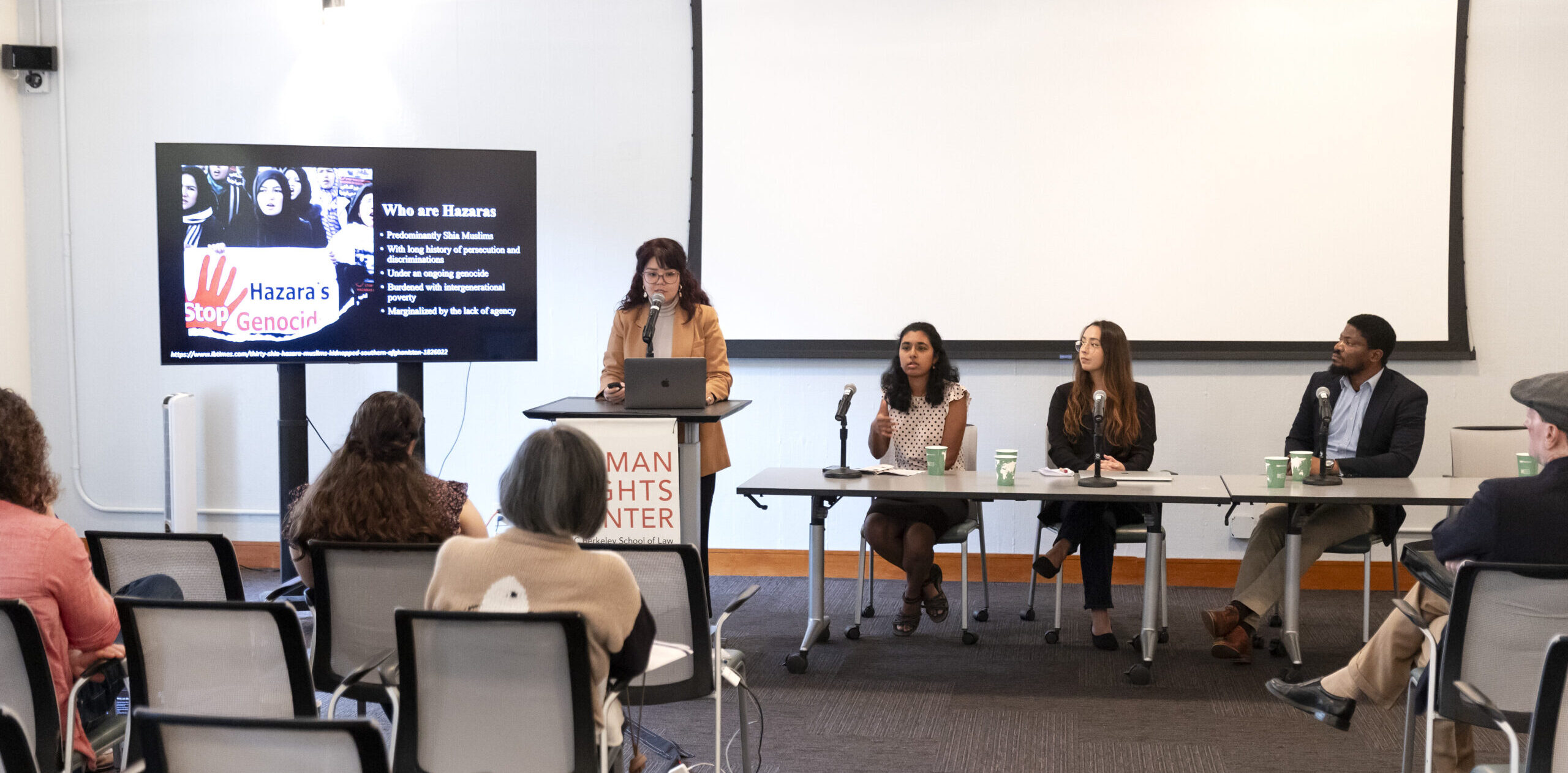
Medina will produce a report on human rights abuses against Afghan refugees in Turkiye to aid ARSA in their advocacy efforts. Medina will also support their day-to-day services including immigration legal support, social cohesion work, and educational workshops.

Monet Lahn
Partner: Stop US Arms to Mexico
UC Berkeley, Political Science
Monet will research cross-border gun trafficking and its impact on communities in Mexico in collaboration with Stop US Arms to Mexico. She will also contribute to the development of the growing binational alliance between survivors of gun violence in Mexico and the United States. Monet will build on the ongoing work of her partner organization and its affiliates, support those affected by gun violence, and pursue a significant decrease in gun trafficking over the border.

Sam Klein-Markman
Partner: Proyecto de Derechos Económicos, Sociales y Culturales
UC Berkeley, School of Law
Sam will support Proyecto de Derechos Económicos (ProDESC) litigation under international human rights and corporate accountability frameworks addressing harms caused by large-scale energy projects in Mexico. He will help develop claims related to indigenous peoples’ territorial rights, corporate due diligence obligations, and local harms caused by development projects.

Samantha Almeida
Partner: InThrive Film Festival
UC Merced, Interdisciplinary Humanities, African American Culture and Documentary Photography
Working with the InThrive Film Festival, an organization that makes films on incarcerated survivors through the work of filmmakers, Samantha will create comprehensive study guides for selected films that contextualize narratives within broader human rights frameworks and provide discussion questions for community use. Samantha will also facilitate partnerships with community organizations, educators, and advocacy groups in the Central Valley and beyond.

Sonali Dhawan
Partner: Thai Lawyers for Human Rights
UC Berkeley, School of Law
Sonali will support the mission of the Bangkok-based International Advocacy Team of Thai Lawyers for Human Rights to secure the freedom of political prisoners and the dismissal of retaliatory charges against dissidents. Her anticipated responsibilities include drafting communications to the UN Special Procedures on cases of targeted dissidents; preparing documentation for Thailand’s fall 2026 Universal Periodic Review before the UN Human Rights Council; producing briefings and contributing to advocacy strategies for diplomats; and attending and observing legal proceedings of targeted dissidents and drafting trial monitoring reports.

Anonymous
Partner: Paradigm Initiative
UC San Diego, Communication and Science Studies
This fellow will investigate the rise of homegrown digital platforms in Ethiopia, where mobile finance, public services, and identification systems are being consolidated into integrated infrastructural nodes. Drawing on critical infrastructure studies, the research examines the structural tensions between platform-driven data aggregation and the region’s nascent data protection frameworks. Conducted in collaboration with regional civil society partners, this fellow will trace how telecom monopolies, platform architectures, and transnational vendor relationships jointly shape digital governance under fragmented political conditions, contributing empirical and conceptual resources to Global South scholarship on platform power and digital rights.