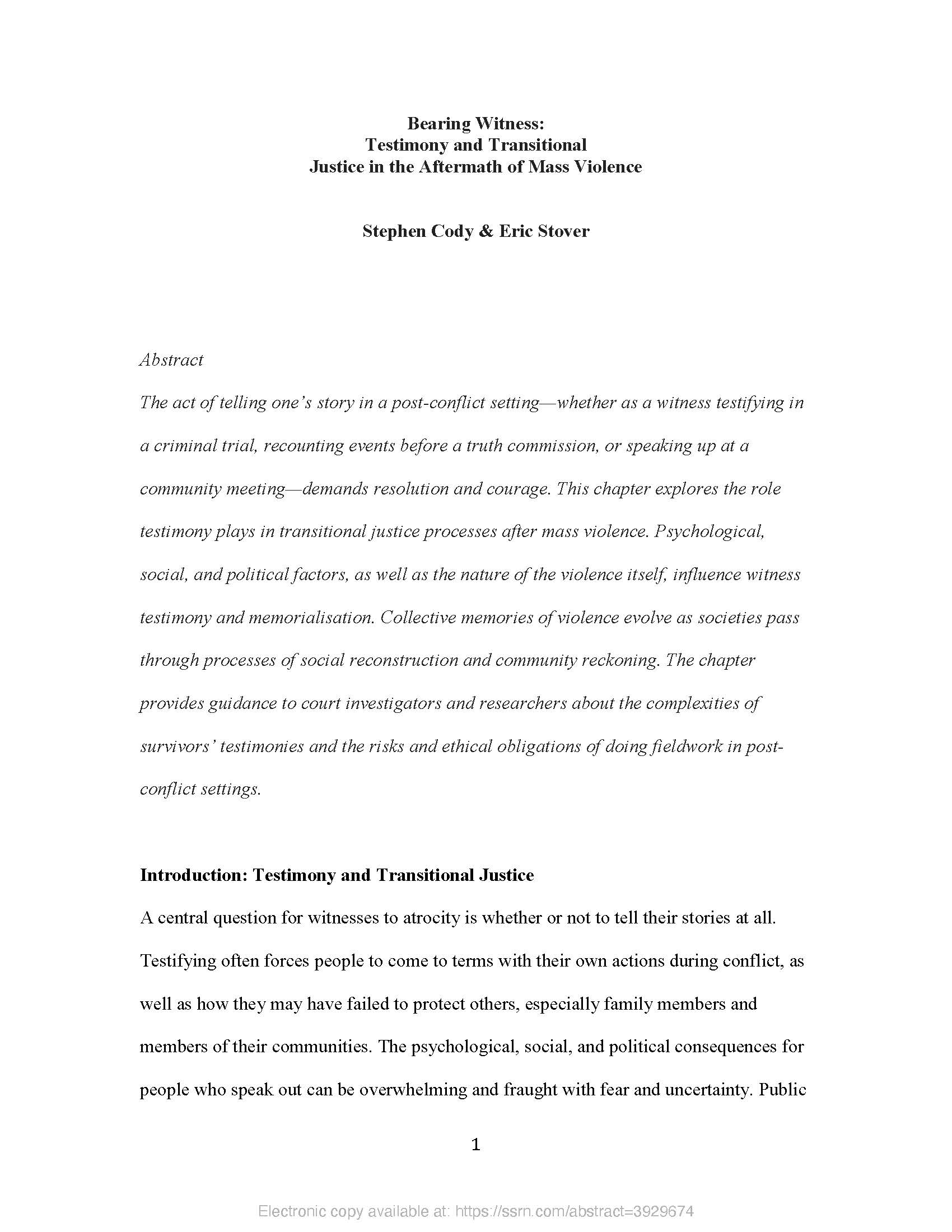
Bearing Witness: Testimony and Transitional Justice in the Aftermath of Mass Violence
Publication Date
September 23, 2021
Publication Type
Book Chapter
Topic(s)
Conflict, International Criminal Law, International Humanitarian Law, Investigations Program
Summary
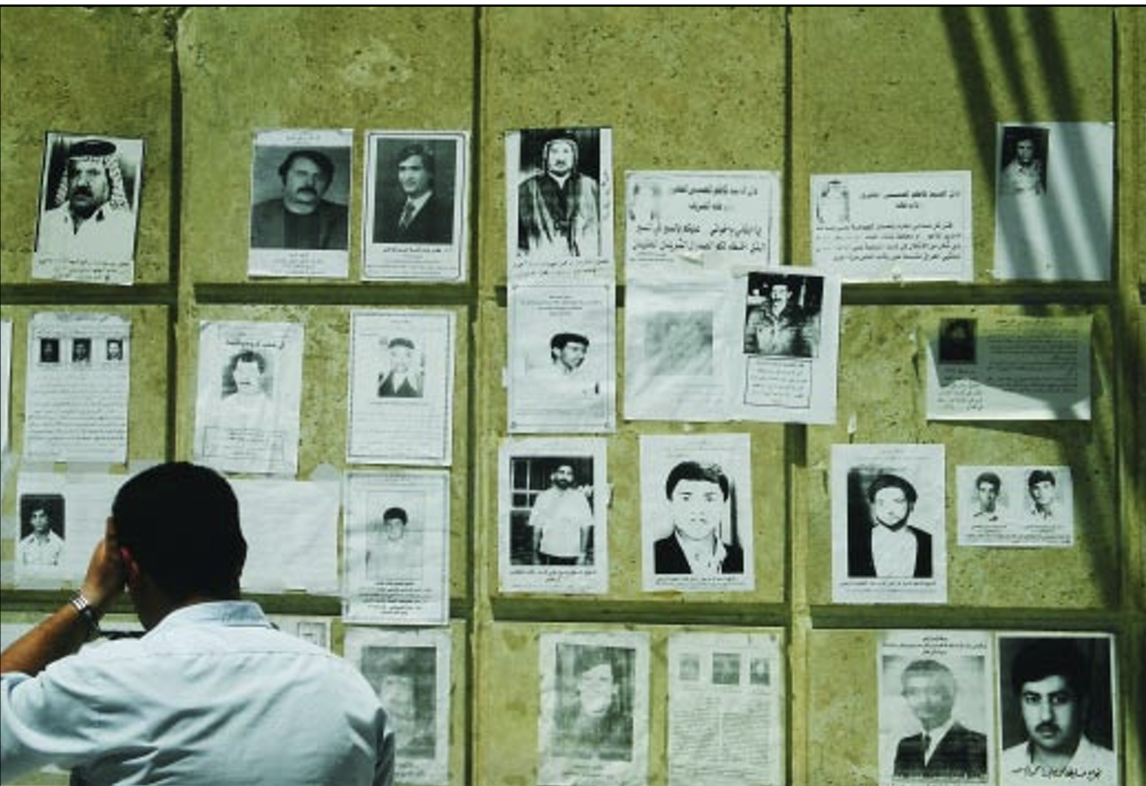
The act of telling one’s story in a post-conflict setting — whether as a witness testifying in a criminal trial, recounting events before a truth commission, or speaking up at a community meeting — demands resolution and courage. This chapter explores the role testimony plays in transitional justice processes after mass violence. Psychological, social, and political factors, as well as the nature of the violence itself, influence witness testimony and memorialisation. Collective memories of violence evolve as societies pass through processes of social reconstruction and community reckoning. The chapter provides guidance to court investigators and researchers about the complexities of survivors’ testimonies and the risks and ethical obligations of doing fieldwork in post-conflict settings.
Key Takeaways
- Witness testimonies play a crucial role in transitional justice processes, helping to document historical truth, advance accountability, and promote social reconstruction after mass violence. These testimonies confront cultural, political, and security challenges, especially as survivors navigate the personal risks of public storytelling.
- Transitional justice mechanisms employ various strategies, such as criminal tribunals, truth and reconciliation commissions (TRCs), and memorials. While criminal tribunals focus on legal accountability for serious international crimes, TRCs are designed to foster national healing by collecting comprehensive testimonies and creating new, inclusive national narratives.
- Victims and survivors have diverse motivations for testifying, including seeking recognition, justice, and social reconstruction. Despite constraints, testimonies often bring personal closure or catharsis and contribute to broader societal understanding.
- TRCs tend to allow more extensive storytelling compared to the legally constrained narratives of criminal tribunals. They aim to expose broader historical contexts and dynamics of violence, potentially including narratives from bystanders and perpetrators, thereby influencing national reconciliation efforts.
- The process of testifying, whether in court or commissions, can be both traumatizing and empowering for survivors. The presence of psychological support mechanisms and institutional measures at international tribunals helps address some of the stress and security concerns associated with providing testimony.
- Memorials, as part of transitional justice, seek to transform witness testimonies into enduring collective memories, often serving as sites for communal mourning and education about past atrocities. However, the politics of memorialisation can sometimes complicate the representation of diverse victim experiences.
- Researchers must navigate ethical challenges in collecting and analysing testimony, ensuring that sensitive handling avoids re-traumatization. Methodologies should account for social complexities, memory reliability, and the influence of transitional justice processes on the scope and content of testimonies.
Suggested Citation
Stover, E., & Smith, S. (2021)
Bearing Witness: Testimony and Transitional Justice in the Aftermath of Mass Violence.
Human Rights Center, UC Berkeley. https://humanrights.berkeley.edu/publications/bearing-witness-testimony-and-transitional-justice-in-the-aftermath-of-mass-violence/