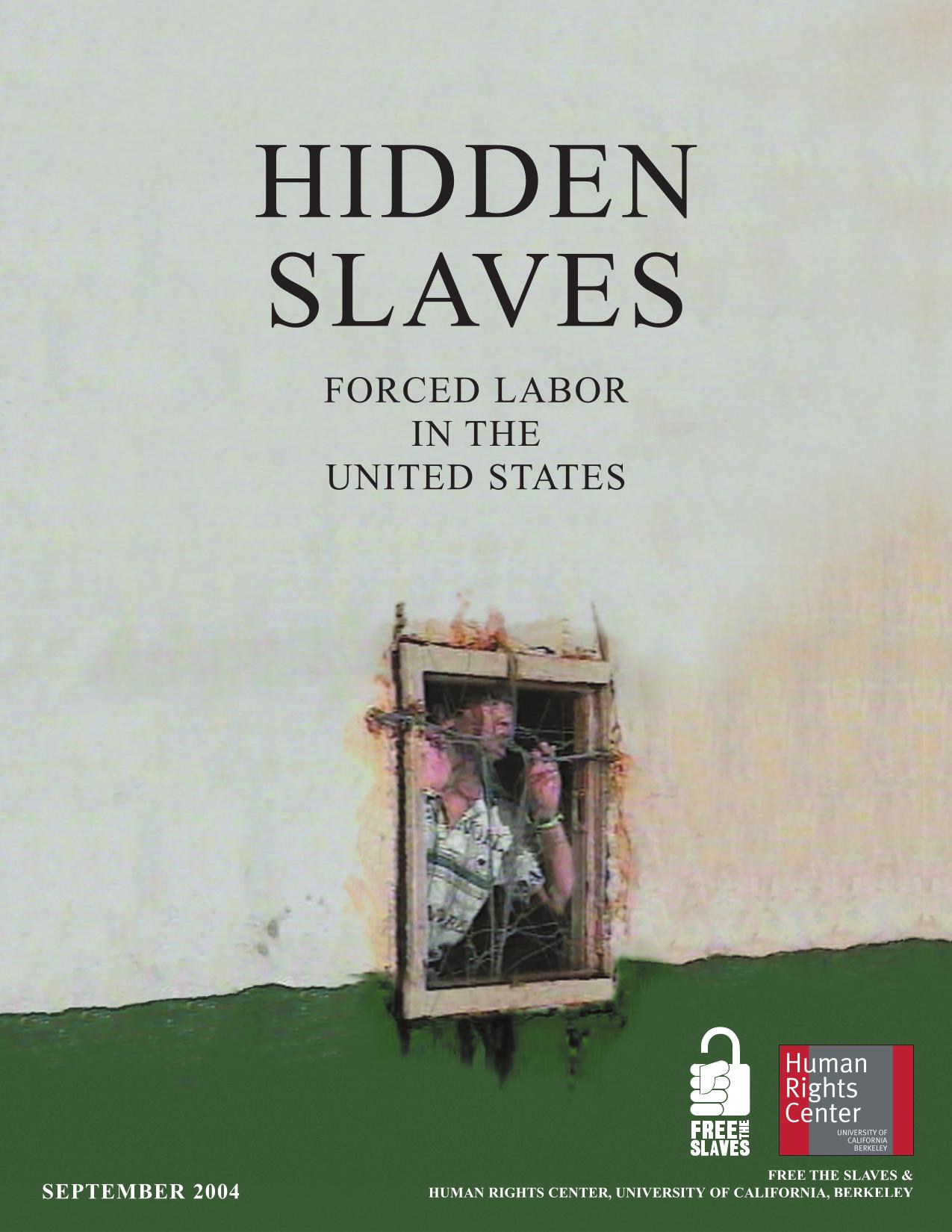
Hidden Slaves: Forced Labor in the United States
Publication Date
September 1, 2004
Publication Type
Report
Topic(s)
Conflict, Public Health
Summary
Forced labor is a serious and pervasive problem in the United States. At any given time ten thousand or more people work as forced laborers in scores of cities and towns across the country. And it is likely that the actual number is much higher, possibly reaching into the tens of thousands. Because forced labor is hidden, inhumane, widespread, and criminal, sustained and coordinated efforts by U.S. law enforcement, social service providers, and the general public are needed to expose and eradicate this illicit trade. This report documents the nature and scope of forced labor in the United States from January 1998 to December 2003. It is the first study to examine the numbers, demographic characteristics, and origins of victims and perpetrators of forced labor in the United States and the adequacy of the U.S. response to this growing problem since the enactment of the Victims of Trafficking and Violence Protection Act (Trafficking Act) of 2000. Conducted by researchers from Free the Slaves and the Human Rights Center at the University of California, Berkeley, the study is based on data obtained from a telephone survey of 49 service providers that have worked with or are expert in forced labor cases, a press survey of 131 incidents of forced labor, and eight cases studies of forced labor in different regions of the United States.
Key Takeaways
- Forced labor in the United States is a significant issue, involving thousands of individuals across various sectors, including prostitution, domestic service, agriculture, and more. It is a hidden, inhumane, widespread, and criminal problem requiring coordinated efforts for eradication.
- Organizations like Free the Slaves and the Human Rights Center are key players in researching forced labor and advocating for the improvement of legal responses and victim support services.
- The Trafficking Victims Protection Act of 2000 is crucial for prosecuting traffickers and providing legal benefits and services to victims. However, it has limitations, such as conditioning benefits on victim cooperation with law enforcement, which may compromise victim protection and recovery.
- Health and safety issues are prominent in forced labor cases. Victims often endure poor living conditions, inadequate nutrition, and physical and psychological abuse, which can lead to long-term health problems. Comprehensive healthcare and mental health support are essential for victim rehabilitation.
- Effective responses to forced labor require improved public awareness, rigorous law enforcement training, better protection and provision of services for victims, and international collaboration to safeguard victims and their families, both domestically and abroad.
- There are significant challenges in providing appropriate legal and social services to forced labor survivors. Services need to be culturally sensitive and tailored to the complex needs of individuals who have faced extreme trauma and exploitation.
Suggested Citation
Stover, E., Fletcher, L., & Bales, K. (2004)
Hidden Slaves: Forced Labor in the United States.
Human Rights Center, UC Berkeley. https://humanrights.berkeley.edu/publications/hidden-slaves-forced-labor-united-states-0/