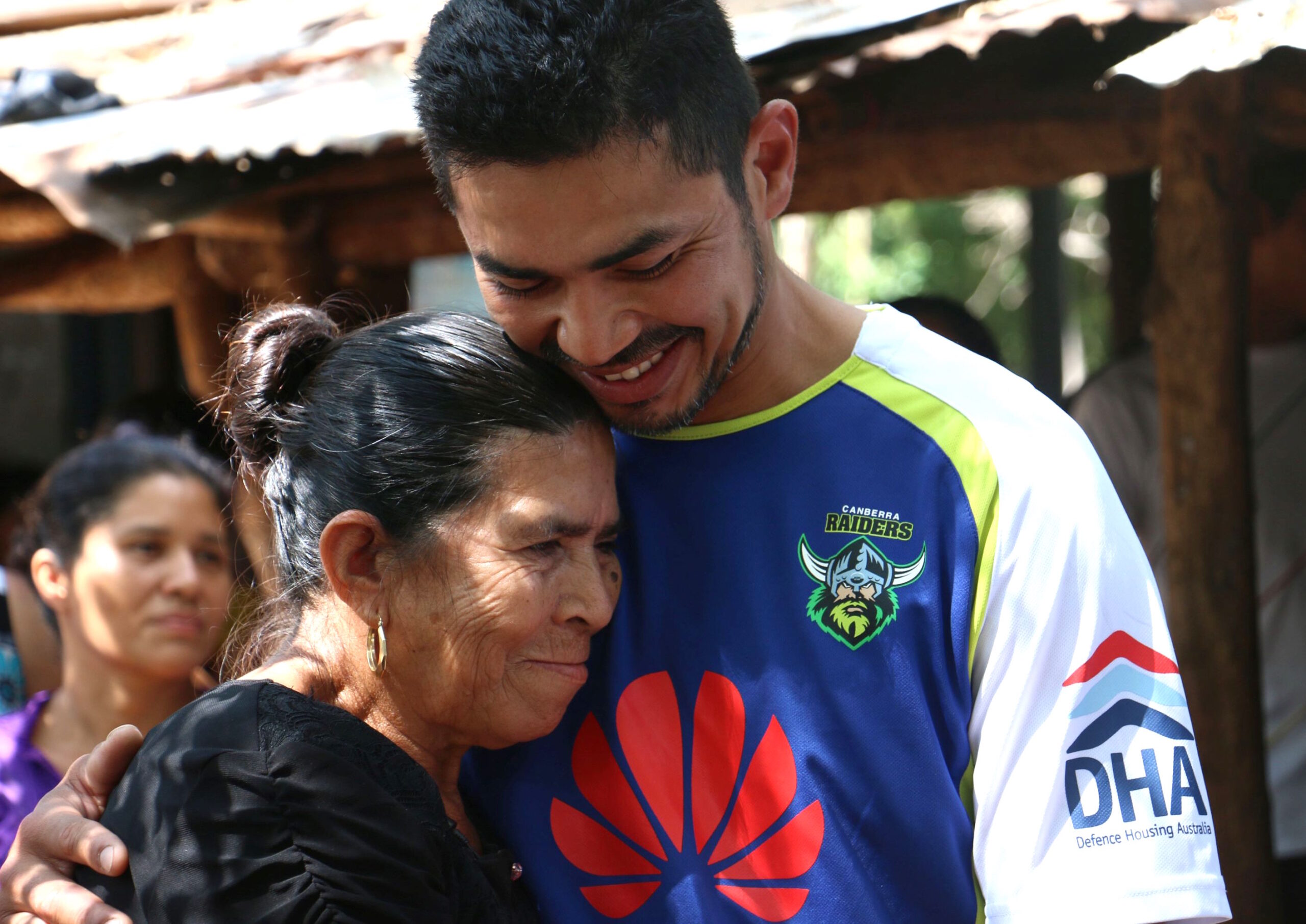
Long Journey Home: Family Reunification Experiences of the Disappeared Children of El Salvador
Publication Date
May 1, 2015
Publication Type
Journal Article
Topic(s)
Conflict, International Criminal Law, International Humanitarian Law, Investigations Program, Technology
Summary
Established in 1994, Salvadoran Asociación Pro-Búsqueda de Niñas y Niños Desaparecidos (Association for the Search of Disappeared Children) has located 384 children, often with the aid of DNA evidence, of the more than 500 who went missing or were abducted during El Salvador’s civil war. Families in other countries who were unaware of the forced separations adopted many of these children. Between 2005 and 2009, we conducted semi-structured interviews with twenty-six children, now young adults aged twenty-four to thirty-four years, who had been reunited with their biological families. We found that we could conceptually categorize the process of separation and reunification into six phases: pre-disappearance, disappearance, separation, searching, reunion, and reunification. While these young adults said that reunification was extremely important, they often found this stage psychologically challenging, given their new identities and their uncertainty about how they would reintegrate back — if at all — into their biological families. We call this process “ambiguous reunification.”
Key Takeaways
- The Salvadoran Asociación Pro-Búsqueda has been instrumental in locating and reuniting 384 disappeared children from the Salvadoran Civil War with their families, utilizing DNA evidence to aid in the process.
- The experiences of family separation and reunification for these children reveal a multifaceted process, dividing into six phases: pre-disappearance, disappearance, separation, searching, reunion, and reunification.
- Psychological theories such as attachment theory and ambiguous loss are essential for understanding the children’s experiences of separation and reunification, highlighting the emotional and identity crises they face during these phases.
- The concept of ‘ambiguous reunification’ emerges as children are physically reunited with their families yet face psychological barriers to reconnect fully and redefine family roles.
- Empirical studies reviewed illustrate that children’s experiences with separation and reunification vary widely, with outcomes influenced by pre-migration conditions, emotional and physical trauma from wars, and the quality of care received during separation.
- Long-term support is crucial for improving the well-being of children undergoing reunification as they navigate identity and connectedness challenges, with resilience emerging as a key factor in successful reunification.
- Policy implications include the need for measures to prevent family separation when possible and to facilitate reunification, supported by findings that family reunification generally benefits the youth involved.
Suggested Citation
Barnert, E., Stover, E., Ryan, G., & Chung, P. (2015)
Long Journey Home: Family Reunification Experiences of the Disappeared Children of El Salvador.
Human Rights Center, UC Berkeley. https://humanrights.berkeley.edu/publications/long-journey-home-family-reunification-experiences-disappeared-children-el-salvador/