Gender Persecution in the Islamic Republic of Iran
Publication Date
January 14, 2025
Publication Type
Report
Topic(s)
Conflict, International Criminal Law, International Humanitarian Law, Investigations Program
Summary
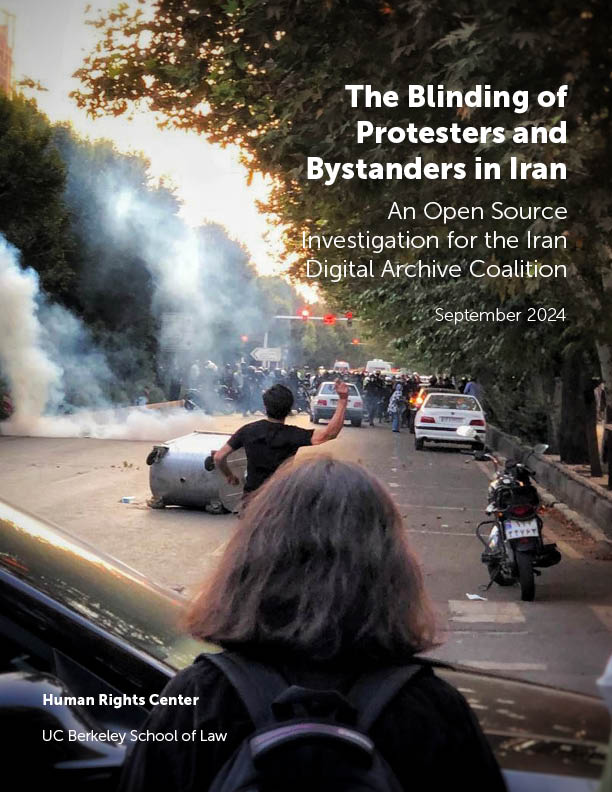
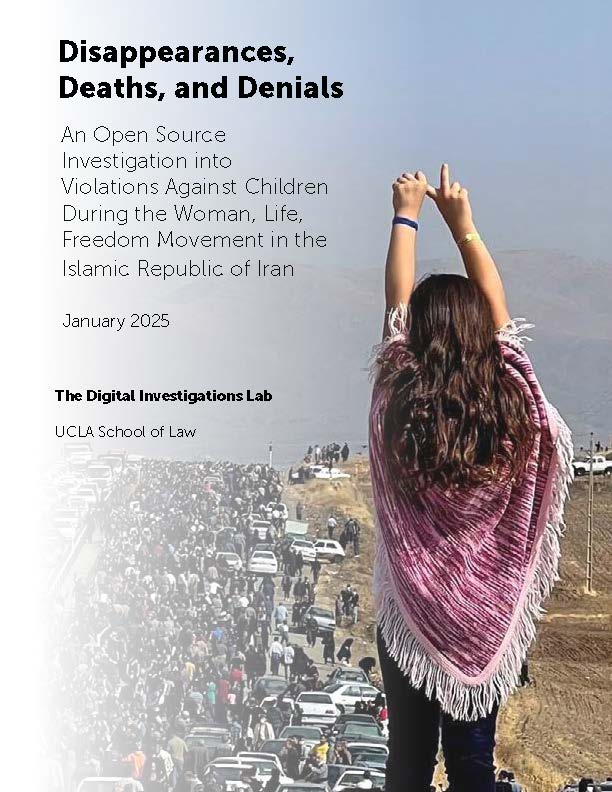
This report, “Gender Persecution in the Islamic Republic of Iran: An Open Source Investigation by the Iran Digital Archive Coalition,” is one in a series analyzing human rights violations and international crimes committed by the Islamic Republic of Iran (Iran or IRI or Islamic Republic) in its brutal crackdown on Woman, Life, Freedom protesters. Each investigation is largely based on open source information that has been preserved as part of the Iranian Archive — a repository of digital content that has been forensically preserved for use in future accountability efforts. Each report in this series focuses on a different set of violations, and together they make visible some of the harms suffered by Iranian protesters in their demands for freedom and respect for their human rights.
The goal of this report includes the identification, verification, and analysis of open source information that supports elements of the crime against humanity of persecution on the basis of gender. The analysis is intended to demonstrate how open source information can be collected and analyzed to support future accountability for the crime against humanity of gender persecution. All digital investigative methods that contributed to this report were guided by the Berkeley Protocol on Digital Open Source Investigations.
Key Takeaways
- The report details an investigation into gender persecution in Iran, highlighting systematic and widespread human rights violations against women, girls, and others advocating for gender equality by Iranian authorities. This persecution, often involving violent enforcement of mandatory hijab laws, is argued to amount to crimes against humanity.
- The investigation relies on digital open source information from the Iranian Archive, a coalition effort to preserve over two million posts documenting these abuses. The archive aims to support future legal proceedings by maintaining evidence compliant with legal standards.
- Significant incidents, including the cases of Sepideh Rashnu, Zahra Haghhighatian, Ghazaleh Chalabi, and others, illustrate the Iranian government’s violent crackdowns on protests. The report analyzes videos and accounts of these incidents to evaluate their alignment with the crime of gender persecution.
- The report emphasizes the importance of intersectionality in understanding the abuses, acknowledging that factors like ethnicity, age, and political stance often intersect with gender-related persecution.
- The findings by an Independent International Fact-Finding Mission suggest that many of the violations by Iranian authorities meet the threshold for crimes against humanity, including murder, torture, and persecution based on gender and other intersecting grounds.
- The investigation calls for holding Iranian authorities accountable and highlights the critical role of international and domestic legal avenues, along with the necessity for reliable preservation and analysis of digital evidence.
Suggested Citation
Richardson, A., & Isfahani, K. (2025)
Gender Persecution in the Islamic Republic of Iran.
Human Rights Center, UC Berkeley. https://humanrights.berkeley.edu/publications/gender-persecution-in-the-islamic-republic-of-iran/